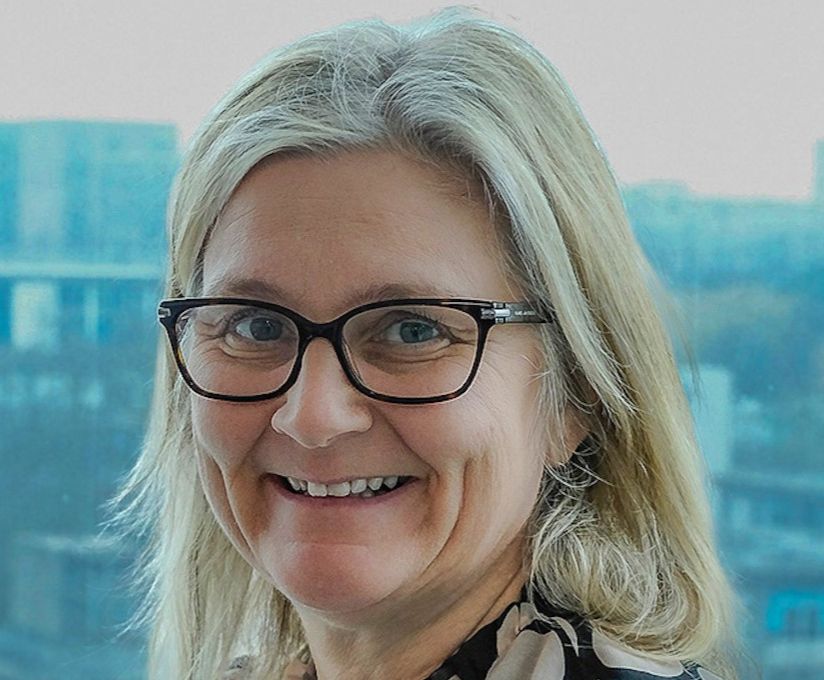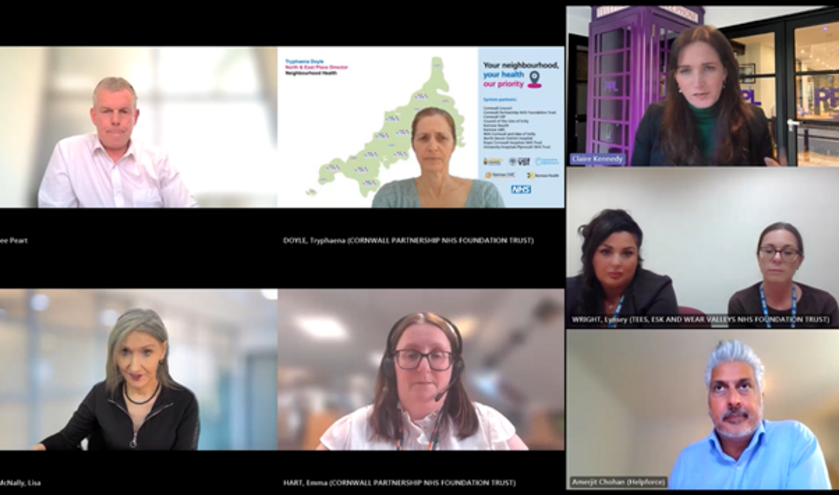
To explore progress on the 10-Year Health Plan's commitment to deliver neighbourhood health our roundtable panel comprised: Lisa McNally, director of public health for Worcestershire; Claire Kennedy, co-founder of social enterprise management consultancy PPL; Amerjit Chohan, chief executive of Helpforce; Tryphaena Doyle, place director, Cornwall Partnership NHS Foundation Trust; Lynsey Wright, team manager for mental health services and Abi Butterworth, community modern matron, both of Tees, Esk and Wear Valleys NHS Foundation Trust.
From concept to reality
Beginning the conversation, McNally described the recently published neighbourhood health framework as ‘inspiring' but cautioned success will hinge on implementation rather than ambition.
‘The guidance on paper is one thing,' she noted, ‘but translating that into action is quite another.'
That sentiment was echoed across the panel. Kennedy framed the challenge not as what needs to be done, but how it is done. Achieving the framework's goals, she argued, depends on rethinking relationships across the system—between organisations, sectors and, crucially, with citizens themselves.
‘What we're talking about is a completely different set of relationships,' she said. ‘This is far more co-creative, far more about meeting people where they are.'
The power of partnerships
If there was one area of strong consensus, it was the centrality of partnership working. Panellists repeatedly stressed neighbourhood health cannot—and must not—become an NHS-only endeavour.
Wright and Butterworth described how years of community transformation work have built deep, collaborative relationships between NHS services, local authorities and the voluntary sector. These partnerships, they argued, are the foundation for delivering truly integrated care.
‘We've had to listen—really listen—to our partners and communities,' Butterworth explained. ‘That feedback wasn't always easy to hear, but it's driven real change.'
Similarly, in Cornwall, place director Doyle highlighted a deliberate strategy to prioritise voluntary sector involvement. Through a dedicated neighbourhood health enabling fund, local leaders are actively encouraging teams to ‘think voluntary sector first' when designing services.
This approach recognises a simple but often overlooked truth: many of the factors shaping health—loneliness, social isolation, housing, employment—sit outside traditional healthcare systems. Voluntary organisations, often small and community-rooted, are uniquely positioned to address them.
Chohan underscored this point with evidence from Cornwall's neighbourhood health pilot, which has reportedly delivered £11.6m in avoided costs. ‘If done well,' he said, ‘with shared responsibility and full involvement of the voluntary sector, neighbourhood health can make a real difference.'
Tackling the wider determinants
The discussion repeatedly returned to the importance of addressing the wider determinants of health—those social, economic and environmental factors that account for the majority of health outcomes.
As McNally pointed out, clinical care influences only around 20% of health outcomes. The remaining 80% is shaped by issues such as poverty, education, housing and social connection. Yet, these factors are often absent from traditional healthcare planning and data systems.
‘Loneliness alone has a huge impact on health outcomes,' she said. ‘But when did you last see it in a risk stratification model?'
This gap highlights both a challenge and an opportunity. Advances in data and digital tools could enable a much richer understanding of population health—but only if systems are willing to share information and broaden their focus beyond clinical indicators.
Kennedy suggested better use of data could transform how services respond to need. ‘We have the opportunity to understand what's happening in people's lives much earlier,' she said, ‘and that opens up entirely new ways of supporting them.'
The evolving role of primary care
While neighbourhood health extends far beyond the NHS, primary care remains a crucial anchor. GPs, with their deep connections to local populations, are seen as central to co-ordinating care and identifying need.
However, panellists were clear the burden cannot rest solely on general practice. With an estimated one in four GP appointments relating to non-medical issues, there is a growing recognition that some demand could—and should—be met elsewhere.
‘Is this a general practice issue, or a neighbourhood issue?' Doyle asked, pointing to vaccination uptake as an example. By reframing challenges in this way, communities can mobilise a wider range of resources—from community groups to local campaigns—rather than relying solely on overstretched GP services.
In Worcestershire, McNally described how closer collaboration with primary care networks has deepened relationships and enabled a more co-ordinated approach. ‘We allow GPs to focus on what happens in the surgery,' she said, ‘while we focus on the community around it.'
A shift in mindset
Despite the practical challenges—data sharing, funding models, workforce pressures—many participants argued the biggest barrier to neighbourhood health is cultural.
‘The technical challenges are minimal compared to shifting mindsets,' McNally said.
Encouragingly, there was a strong sense this shift is already underway. Across the panel, speakers described a growing openness to collaboration, a willingness to experiment and a recognition that existing models are no longer sustainable.
Kennedy reflected on how far the conversation has come over the past two decades. ‘Twenty years ago, we thought we could just keep tweaking the system,' she said. ‘Nobody thinks that now.'
Why now?
So why might neighbourhood health succeed now, when similar initiatives have struggled in the past?
For many, the answer lies in a combination of urgency and alignment. The pressures facing the health system—rising demand, constrained resources, workforce shortages—have created what Doyle described as a ‘burning platform' for change. At the same time, national policy, local experience and public expectations are increasingly aligned around the need for a more preventative, community-based approach.
‘There is no plan B,' Kennedy added. ‘We have to do this.'
Crucially, neighbourhood health is no longer seen as a pilot or optional extra. It is becoming the core operating model for health and care delivery.
Looking ahead
The roundtable closed on a note of cautious optimism. While challenges remain, there was a palpable sense of momentum—and a belief that the foundations for change are finally in place.
For Chohan, the key difference this time is the level of engagement and shared purpose across sectors. For Wright and Butterworth, it is the strength of relationships on the ground. For McNally, it is a growing commitment to a whole system view of health.
Ultimately, the success of neighbourhood health will depend on whether these elements can be sustained and scaled. But if the energy and insight from this discussion are any indication, the shift towards more local, collaborative and preventative care is not only possible—it is already happening.
And this time, it may just stick.