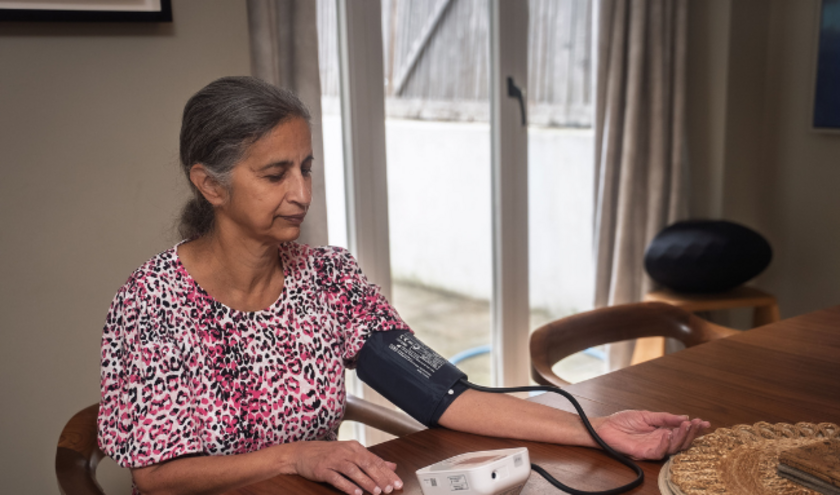
In a first for the NHS, the Barnet Enhanced Virtual Care pilot will focus on patients at high risk of emergency admission, including those with chronic liver disease, coronary heart disease, Parkinson's, dementia, osteoporosis, plus a further 13 conditions, and provide them with at-home care and monitoring to help them avoid needing a stay in hospital.
Patients who have one or more of these conditions and who have been admitted as an emergency in the past year will be invited to join the study. They will have access to a specialist virtual care team comprising consultants, nurses, pharmacists and more, 24 hours a day, 7 days a week. In addition, they will be provided with free, easy-to-use technology, such as apps and other remote patient monitoring devices, that will allow clinicians to spot early signs of being unwell so they can continue to be kept healthy at home.
Patients will also be paired with a health coach who gets to know them so they can support the person, not just the condition.
A personalised care plan designed to fit around their daily routine and personal goals will be developed for each patient and they will also have help managing their medication.
The service will be managed by a team at Barnet Hospital and the day-to-day care of the patients will be provided by Doccla, a virtual healthcare provider. The initial pilot, which launched this week and is due to run until April 2027, will involve 2,500 patients from Barnet.
Doccla will hold day-to-day clinical responsibility for patients and the RFL will retain system-level clinical governance as the accountable NHS provider. Patients will remain registered with their usual GP. The North Central London ICB will work alongside other NHS providers across NCL to understand how this approach could be implemented more widely.
It has been estimated that there could be a reduction of up to 30% in emergency admissions among the cohort taking part, as well as reducing non-emergency attendance.
Denis Enright, Royal Free London's director of neighbourhood health, said: ‘It is about combining technology, wrap-around-care and engaging patients in their own health right from the start. By giving people the tools they need to stay well and independent at home we hope to reduce the need for admittance to hospital.'