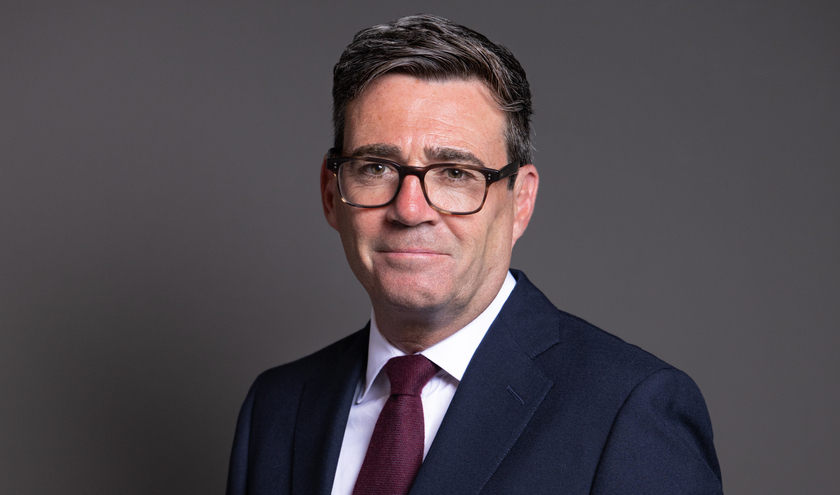
During a visit to a Jewish care home , the prime minister outlined plans to reform social care - the news can be read in full on our sister title Social Care Today. The measures included bringing forward Baroness Louise Casey's independent commission, so it reports in 2027, improving pay for the care workforce and holding cross-party talks on the future of the sector.
During his speech, Burnham said: 'I won't stand by and leave people paying the price for Westminster's refusal to deal with the real issues facing our country.
'I just don't accept that this problem is too big to solve. What we need is a new way of doing politics where we come together, face the challenge head on and build an integrated system that gives people security and dignity.'
While industry experts have welcomed the prime minister's commitment to improving social care, questions remain over whether his words will translate into action. You can read people's reactions below.
James Sanderson, chief executive at the palliative care and bereavement charity Sue Ryder
'When people with terminal illness are stuck in hospital, they aren't thinking about whether it's social care or health care they need. They just need the system to put the care in place that is right for them. Too often the bureaucracy between health care and social care creates unnecessary delays. It means people die in busy, noisy hospital wards and corridors instead of being surrounded by the people they love, and in the place they most want to be - home.'
'We welcome the government's announcement that they want to fix social care. And we are ready to support delivering the reforms needed so that people who are dying receive the end-of-life care they deserve.'
Professor Martin Green OBE, Chief Executive of Care England
'Care England warmly welcomes a prime minister who has chosen to spend the second week of his premiership standing in a care home and telling the country that social care matters, because a sector that had grown used to being an afterthought in Westminster has noticed the change in tone and has allowed itself to hope again.
'We said as much only yesterday when we published our Two Years of Promises scorecard, which graded the last government's record against its own manifesto at C minus, or, in the language our member care services are judged in every day – ‘requires improvement'. What will decide whether this becomes the turning point the sector needs is the substance of the delivery that follows. Our members will want to know what will this look like and how it will be funded, and they will rightly want to see the ambition set out today matched by the money to deliver it before they can really believe that meaningful change is on the way.'
Laura Chinyere-Ezeh, HR consultant for the health and social care sector at Browne Jacobson
'This is a challenge that care providers have been grappling with for years and requires dedicated, long-term support from government to develop a sustainable pipeline of carers, registered managers and specialised practitioners.
'The prime minister's commitment to expanding the fair pay agreement and improving pay, training and job security for care workers is very welcome.
'Impacts stemming from restrictive immigration policies under Sir Keir Starmer's government, including limiting the number of care worker visas for overseas workers who represent a significant proportion of the health and care workforce, has made the domestic workforce agenda all the more urgent.'
Chris Cooke, mayor of Middlesbrough and chair of SIGOMA
'It's welcome that the prime minister has recognised the urgency of social care by bringing forward Baroness Louise Casey's report, committing to a greater focus on the workforce and seeking cross-party census on reform. Those are important steps, but our members will rightly be looking for action to follow.
'We need a long-term plan that gives councils the funding certainty to meet rising demand, supports the care workforce and shifts the focus towards prevention and early intervention. The government must also address the disconnect between health and social care. Too often people are left navigating fragmented services while local authorities are left managing the consequences. A more joined-up system would deliver better outcomes for residents and better value for taxpayers.'
Eammon Price, CEO of Flourish
‘Social care reform has been promised for years, so bringing the review forward and starting cross-party talks is welcome. But care workers need to see things changing before 2027.
‘We hear regularly from people working on the frontline as they complete their training. Our latest survey with 15,000 care workers shows that more than one in three are not satisfied with their pay. That is a clear sign that action on the workforce cannot wait.
‘The Fair Pay Agreement is an important step, but it must be properly funded and form part of a wider plan for the workforce. Better pay matters, but pay alone will not solve the workforce crisis.
‘People need good training, proper support and a clear route to progress. Too many still enter care without being shown where the job could take them. The real test will be whether these plans result in more people joining social care, building careers and choosing to stay.'
Caroline Abrahams, Charity Director at Age UK
‘The prime minister made clear today that he is totally committed to fundamental social care reform and that can only be a good thing for older people. These are exciting times and we look forward to hearing a lot more after the summer break, if not before.
‘It's right that the prime minister has asked Louise Casey to accelerate her independent commission so it reports in a year's time and we hope the Big Conversation she launched today will help to draw out what the public want to see from social care, as well as thinking through the funding options.
‘We won't all necessarily have to pay more as individuals for a better system of social care but it's likely we'll have to pay differently: at present older people often face big bills when they are in crisis- for example after a fall. It would be much better if we followed the example of many other developed nations & paid in to a big pot in advance or after our deaths, so when we need care it's there for us, however much or little money we actually have.
‘The prime minister covered all the main elements of social care in his speech and said something especially interesting about the social care workforce: namely that he wanted to see a shift towards equal pay with the NHS. This would undoubtedly take time to achieve but would be a game changer in terms of recruitment and staffing - a long-standing problem within social care.'